
Conference
Life Flows Through Its Arteries!
Was Constantinople a Healing City in Byzantium?
Rethinking Health and Healing in the Urban Ecosystem
Brigitte Pitarakis


13 March 2026 / 18:30

The relationship between health and the environment reveals the link between the body and nature. What can past experiences tell us about today’s approach to health, the environment and art?
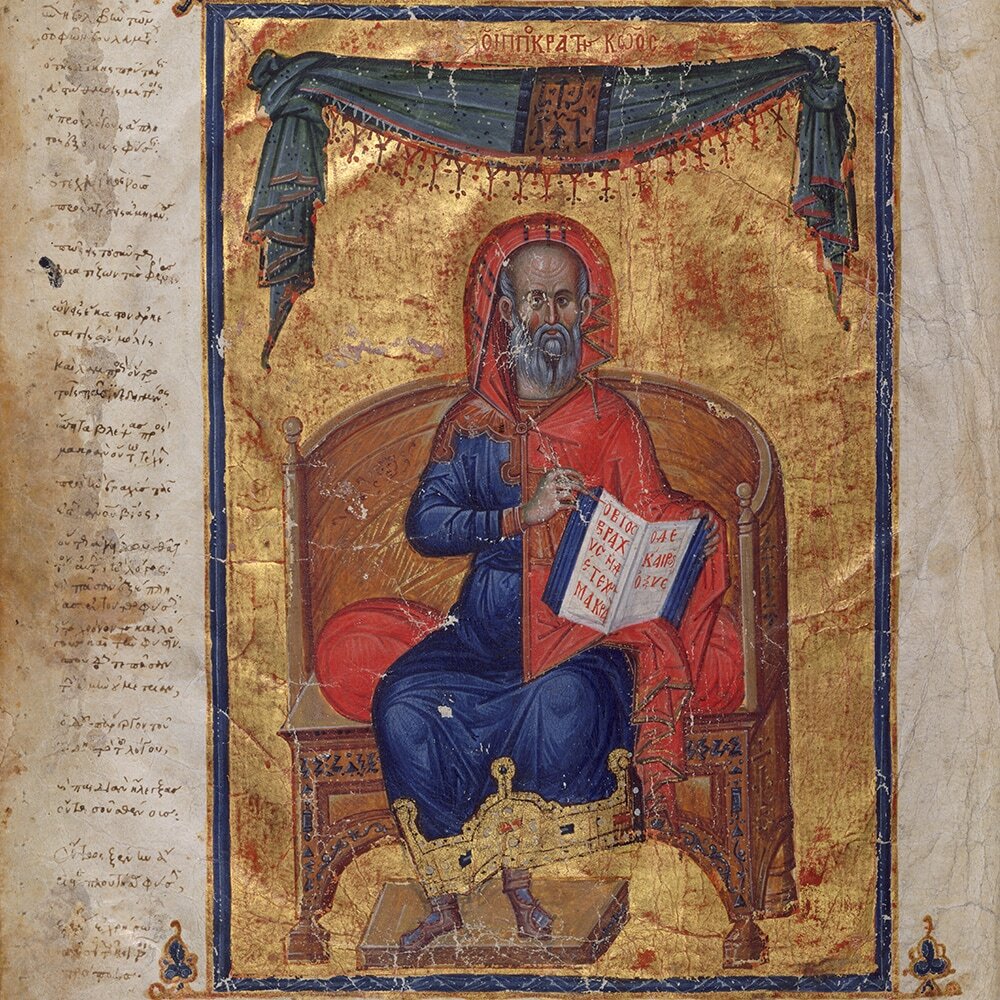
This lecture invites us to think of late Byzantine Constantinople as a healing city. In the Byzantine literary tradition, the city may be conceived as a living organism, metaphorically identified with the human body: a body that can fall ill, yet is also capable of recovery and revival amidst historical turbulence. The recapture and subsequent renovation of Constantinople under the Palaiologan dynasty following the Latin occupation (1204-1261) is situated within a narrative of renewal and resilience in contemporary texts. In this framework, the Byzantine capital appears as a body of healing, nurtured by medical knowledge and continually rejuvenating itself.
Waterways, as the city’s arteries of life, maintenance practices that ensure the continuity of this infrastructure, and green areas form the invisible yet indispensable components of urban health and thus reflect the city’s capacity to continually renew itself. In Byzantine medicine, water was at the center of both healing and protective practices; and diseases and epidemics caused by polluted water and air were considered fundamental concerns within medical discourse.
The lecture that will be held within the scope of Medicine Day on 14 March will focus on how physical and mental health were imagined holistically in the Byzantine world via developments in medicine and pharmacology, purification practices and healing sites; and reassess from a historical viewpoint the ancient relationship between the city, the environment and health.
The conference, which will take place at Pera Museum Auditorium, is free of charge and will be held in Turkish. No reservations are required.
Brigitte Pitarakis, CNRS, Paris (UMR 8167 Orient et Méditerranée)
Brigitte Pitarakis is a Director of Research in Byzantine Studies at the CNRS, member of the Scientific Committee of the Suna and İnan Kıraç Foundation Istanbul Research Institute, and editorial board member of the journals YILLIK: Annual of Istanbul Studies and Cahiers archéologiques.
Her work focuses on Byzantine metal art. Her research treats material culture within the social and cultural contexts that produce it, thus rendering visible the formative function of metal in Byzantine everyday life. She is currently working on a book examining the lasting impact of bronze objects on Byzantine society.
She acted as curator of four exhibitions focusing on Byzantine culture, held from 2007 to 2021, at the Pera Museum. They included Life Short, Art Long: The Art of Healing in Byzantium (2015), which offered a groundbreaking viewpoint in this field of research through the dialogue it developed between disciplines and eras.


